Wet firewood is the quiet reason a fire refuses to catch, smolders, hisses, and coats your chimney with creosote. Seasoning is the fix, and it is mostly about two things: giving moisture somewhere to go, and giving the wood enough time and surface area to let it leave. The good news is that a few changes to how you split, stack, and cover can cut months off the process. Here is what actually moves the needle when you need dry wood before the cold arrives.
Drying Starts at the Split, Not the Stack
A whole round can sit for two years and stay wet in the middle. The bark holds moisture in, and the distance from the outside to the core is simply too far for water to travel in one season. Every split you make shortens that distance and opens fresh grain to the air.
So if your goal is speed, split smaller than you think you need. Pieces with a thickness of roughly four to six inches across the widest face dry dramatically faster than big blocks. You lose some burn time per piece, but you gain a season.
- Split in spring, not fall. Wood cut and split in April has a full summer of warm, dry air ahead of it. Wood split in October has almost none.
- Split when the wood is fresh. Wet wood splits more cleanly than dry, and you avoid trying to season rounds that have already sealed over.
- Leave softwoods in bigger pieces. Pine, spruce, and fir dry quickly anyway; save your splitting effort for dense hardwoods like oak, hickory, and locust.
- Strip loose bark and mud. Both hold surface moisture and slow the first few weeks of drying.
Stack It So the Wind Can Do the Work
Airflow is the engine of the whole operation. Sun helps, but moving air carries moisture away, and it works on cloudy days too. A pile that is tight, low, or tucked against a wall will stall.
Placement and shape
Pick the sunniest, windiest spot on the property, ideally with the long axis of the stack running perpendicular to the prevailing wind. Keep it well away from buildings, fences, and dense brush, which block breeze and trap humid air. If you have a choice between full sun and steady wind, take the wind.
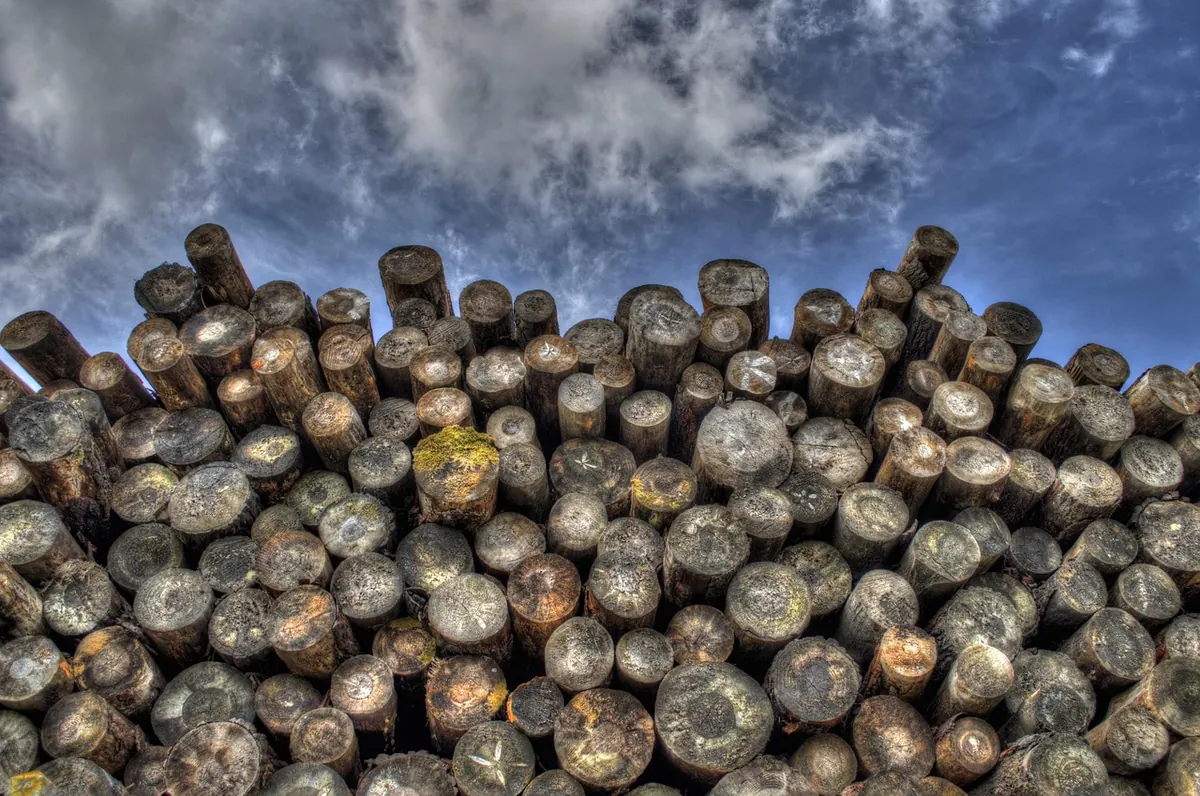
Get the wood off the ground. Pallets, pressure-treated runners, or a couple of sacrificial logs will do. Ground contact wicks moisture upward and rots the bottom row. Then build a single row if you have space. One row dries roughly twice as fast as two rows pressed together, because every piece is exposed. If you must stack in multiple rows, leave a hand-width gap between rows so air can move through the middle.
Don't stack so high that the pile becomes unstable, and don't pack it tight for neatness. Loose and slightly messy beats tidy and dense every time.
Cover the Top, Leave the Sides Open
Tarping the whole pile is the most common mistake. It sheds rain, yes, but it also traps the moisture you are trying to remove and turns the stack into a humid box. In still air, that can mean mold, and moldy wood is unpleasant to handle and no better to burn.
The right approach is a lid, not a wrapper. A sheet of roofing felt, a strip of plywood, or a tarp folded so it only drapes over the top few inches works well. Weight it down with a few pieces of scrap. The sides stay fully open to the wind.
If you can walk past your stack and feel air moving through the gaps, it is built right.
Build a Simple Solar Kiln
If you want the fastest natural method available at home, build a solar kiln: a clear cover that traps heat while still letting moist air escape. It is essentially a greenhouse for firewood.
- Build your single-row stack as usual on pallets, in full sun.
- Frame a simple hoop or box around it using scrap lumber or PVC.
- Drape clear plastic sheeting over the frame, leaving the bottom edges open a few inches along both sides.
- Cut a small vent at the top so warm, damp air can rise and leave. Without vents, you will grow mold instead of drying wood.
- Check the stack weekly. Shake off pooled condensation and look for any white or green fuzz on the wood.
Inside a setup like this, temperatures climb well above the outside air, and drying speeds up noticeably compared with an open stack. In a wet, cool climate, the gains are smaller and the mold risk is higher, so keep those vents generous and pull the plastic if the weather turns foggy for days.
Test With a Moisture Meter Instead of Guessing
You cannot tell whether wood is ready by looking at it. A moisture meter takes the guesswork out of the last few weeks, when it matters most.
Use it correctly: split a piece open and press the pins into the freshly exposed inside face, with the grain. Readings taken on the outside of a log tell you almost nothing, because the surface dries long before the core does. Take readings from several pieces, since a stack dries unevenly.
Firewood is generally considered ready to burn at under 20 percent moisture content, and closer to 15 percent is better. Green hardwood can start out well above 40 percent, so there is real distance to cover. As a no-meter check, bang two pieces together: dry wood cracks sharply, while wet wood thuds. Dry pieces are also noticeably lighter and show radial cracks at the end grain.
Fast-Track Tricks When Winter Is Close
Some shortcuts work and some are folklore. Bringing wood indoors to a warm, ventilated space for the final stretch genuinely helps, provided you give it a couple of weeks and keep it away from walls and floors so air circulates. A garage with a fan running does more than a closed shed with no airflow.
Mixing in a load of kiln-dried wood, or any wood you already know is dry, keeps the stove going while the rest finishes. So does burning smaller, thinner pieces from the outside of the stack first. What does not work is stacking wood directly against the house, burying it in leaves, or painting the ends with sealer in the hope of keeping moisture out. End sealer slows drying at the ends; it does not speed anything up.
A Plan You Can Start This Weekend
Split smaller than usual, stack in one loose row on pallets in the sunniest, breeziest spot you have, and cover only the top. Add a vented plastic tent if you want speed, and buy an inexpensive moisture meter to know when you are done. Give the stack a full warm season if you possibly can, and rotate the oldest wood to the front of the queue. Do that, and next winter's fires will light easily, burn hot, and leave far less creosote behind.
Photo: ClickerHappy / Pixabay